
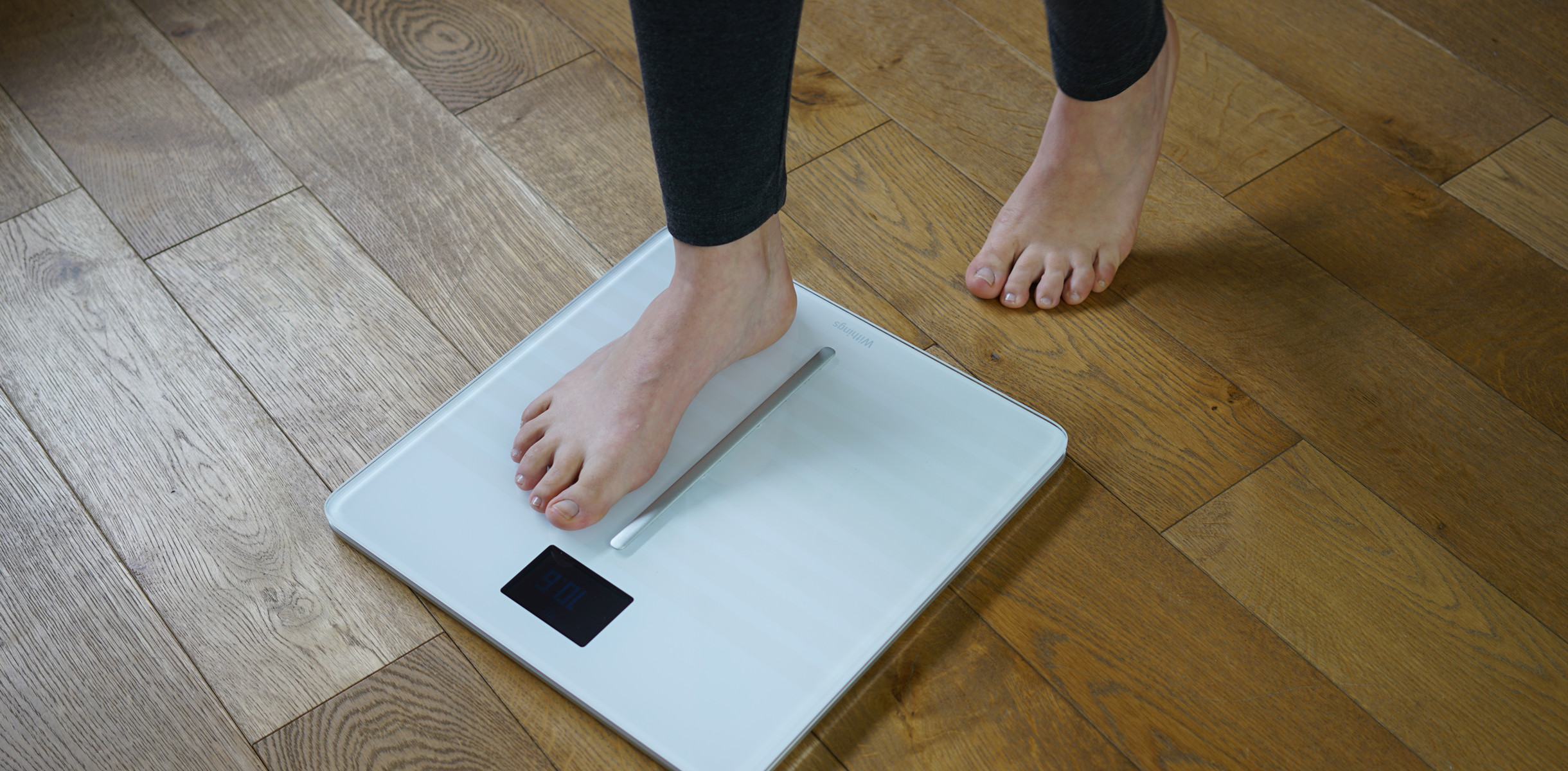
The bathroom scale gets a bad rap.
We can blame that on the old-school belief still floating around out there, that weighing more than once a week can be psychologically damaging or cause us undue stress.

But contrary to this popular theory, current research suggests that the most effective frequency for doing weigh-ins is daily.
As in EVERY DAY.
As a personal trainer, I don’t need a study to tell me this. I can just look at my trainees, all who record their weight and body fat percentages daily. Once jumping on the scale becomes part of their daily routine, it ‘normalizes’ weighing in. It eliminates any big emotional shocks and surprises that can happen with only occasional weighing.
The Powerful Psychological Impact of Daily Weigh-ins:
Weighing daily keeps our current weight at the forefront of our minds. If we see we’re up a little in weight one morning, then it’s likely we’ll consciously work a little harder to be disciplined that day. Without the daily weigh-ins, we may not realize we’ve slowly been creeping up, so we don’t make any adjustments. And that right there, gang, is almost always how we start on a path of slow-and-steady weight gain. Ignorance is NOT bliss.
The Fascinating Things You Learn About Yourself From Weighing Daily:
I’ve always been protective of my trainees and not pulled them into my articles, but my newest trainee’s story is so fitting and powerful I’ve actually gotten his permission to share it.
“Lou” started training with me 33 weeks ago. His life is quite unusual, and his work means he has to travel around to events where he does speaking engagements over the course of a few days to a week at a time.
Lou, who weighs daily, is down 34lbs since we started (even though weight loss is only our secondary goal), I’m incredibly proud of his hard work.
Here’s where things get interesting:
When Lou is at one of his events, his weight shoots up significantly. You’ll probably think this has to do with him eating more when traveling, but he doesn’t. Lou also logs all his food for me, and his eating remains consistent during his speaking weeks.
It’s Not Just Eating That Causes Weight Spikes:
What we’re seeing here in Lou’s daily weigh-in data is the role sleep and stress play on one’s weight. While Lou’s type of stress is along the lines of the “good” sort from having to be “on” and “social” all day during his events, the body treats good stress and bad stress the same. I won’t get into the whole hormonal checks and balances thing that happens when we’re stressed or sleeping off-schedule, but in Lou’s case it’s a powerful enough effect we’ve seen it in his weight data 100% of all the gigs he’s had since training with me. And wouldn’t you know it, the day after Lou is done with one of his events, without fail, his weight is back down and we’re back on track.
The Scale Says More Than We Realize:
Now, I’m certainly not saying Lou’s weight gain during his event weeks is fat gain, not at all. Around 60% of the body is made up of water, and those levels fluctuate so much day to day, and even hour to hour. Weighing daily is feedback on those fluctuations as well.
And what’s so wrong with monitoring fluctuations?
That seems to be another brush-off about weighing daily… “well, what about fluid retention, the scale is deceiving because it’s not just measuring fat gain/loss, yada yada yada”. Those “fluctuations” that get easily dismissed as worthless data tell us more than we give them credit for. Lou here is good evidence of that. Lou now knows that his work engagements create a physiological response in his body and we can actually see it thanks to his daily weigh-ins, even if it may not be an accurate measure of his current fat and muscle mass.
Bottom line is this: If you want to stay on top of your health and fitness AND learn a little bit more about yourself in the process, start weighing daily.
Scales I Like and Recommend:
RENPHO Bluetooth Body Fat Smart Scale: One of my trainees is a full-time RVer, and one of the things we loved initially about this one is its smaller footprint, so it fits nicely in her smaller rig. She’s been using it many months now, sending me her data she gets from the RENPHO app each week, and I like the variety of metrics it tracks for her. It syncs with many other apps, like Apple Health and Google Fit.
FitBit Aria 2 Wi-Fi Body Fat Smart Scale: Yet another trainee swears by the accuracy of this one, and I’ve been pleased with the data I see coming from it as well. You don’t need a FitBit but if you already have one, you won’t need a new app, they fully integrate perfectly. If you plan to use this in your home where you can connect it to wi-fi, give it a look.
Tanita IronMan Multi-Frequency Body Composition Monitor: Multi-frequency scales are the gold standard for home scales, and I’ve been using this one in our home gym and with training clients for years. It uses BIA technology, which sends a safe, low-level electrical signal from foot and hand electrodes through the body to provide both a full body as well as segmental analysis. Not sure what’s up with a few of the bad reviews on Amazon, but I’ve found this scale and the body fat percentage data to be incredibly consistent and accurate. Just be prepared for a little sticker shock when you see the price.
Before I Sign-Off, Here’s One Noteworthy Caveat:
While I hold by this advice for the general population, it should be noted that anyone with eating or emotional disorders should consult with a professional about frequency of weigh-ins. I have had trainees in the past I’ve had to ban from scales, and others I’ve had to keep on a less-frequent weighing schedule. Like everything in life, there are always exceptions, and if you know daily weigh-ins wouldn’t be healthy for you, don’t do it!
Comments and questions welcomed below!
xo,
Trainer Stef 💪









Stephanie,
I’ve been doing this and using Lose It for the last 580 days. I’ve lost over 50# at this point on my way to 80#. Thanks for the encouragement. Advice to your readers: weight while you’re young. At 76 it becomes more of a chore.
The very happy side benefit is that my Type 2 Diabetes is gone!
Thanks again,
Bill
I love this advice! I have the Aria Fitbit scale with data on weight going back to 3/28/13! It’s interesting to see my personal weight trends.
Thanks for sharing your client’s weight journey. That was so interesting that his weight spikes during his travel/speaking engagements.
Going to share this article with my Vibrant Lifer Community!
Thanks Stef!
Another Aria user, nice Toni! Glad you’re monitoring your data on it, way to go. Another thing I have some trainees do is jot down some notes each day, or keep a journal, on things happening in their lives so we can look back and try to understand any weight spikes or plateaus we see. There are loads of journaling apps out there; it can be another good piece of information in understanding the mystery of the fickle human body! ❤️
“The scale is your friend”. I used to hear this from (at that time) an older guy who was probably in the best shape of anyone I knew.
Since I became Vegan due to my wife changing how she is cooking a little over 2 years ago I lost about 25 lbs. I do weigh myself everyday and thought I was being anal but based on your article I am doing the right thing. I stopped losing weight at 154 lbs. but have fluctuated from 151.5 to 157.5 and don’t know why the variation. I do walk every day to get over 10k steps
Congrats on your weight loss! Glad to hear the daily weigh-in’s may have played a role in keeping you on track.
Stef, if you haven’t already, you might want to check out Trendweight. It’s free, is based on the “Hacker’s Diet”, and helps to ignore daily fluctuations and concentrate on gain and loss trends. It works well with our Fitbit Aria or a Withings scale, and since the RENPHO claims to sync with the Fitbit app, that may work as well. Each user gets a unique URL that they can share with friends, family, their trainer, etc. – I share with my doctor.
Check it out here: https://trendweight.com/help/
Sounds like my kind of app. I’ll give it a look; thanks, Steve!