
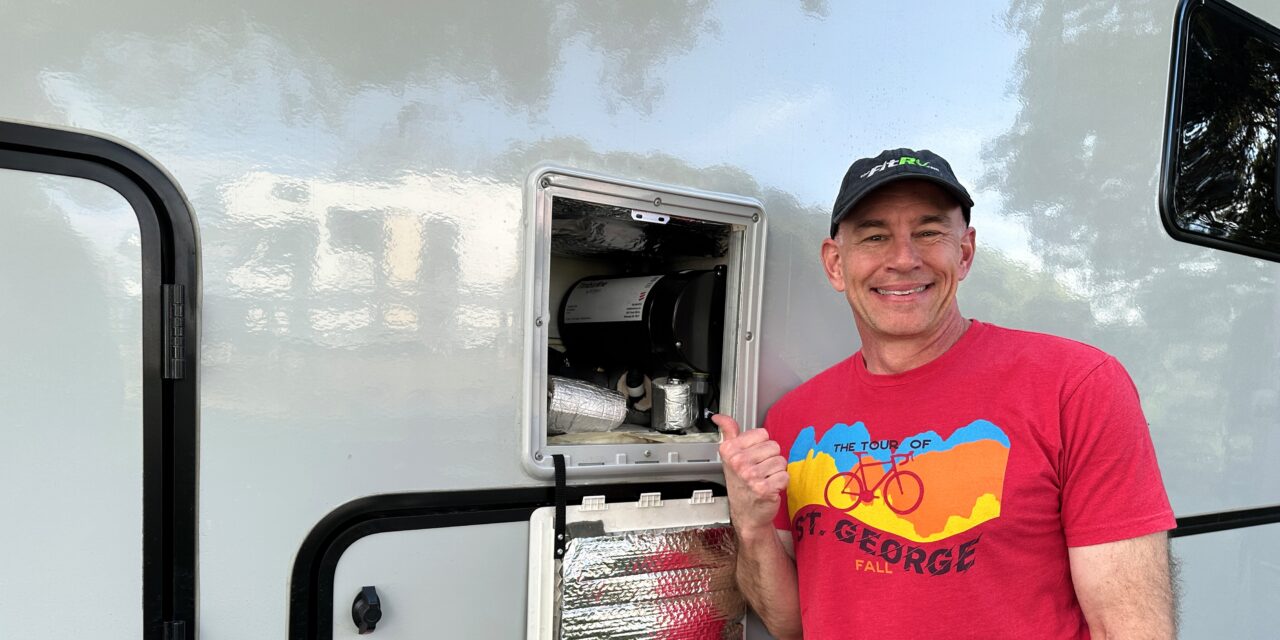
We’ve loved almost everything about our Winnebago EKKO – and those things that we didn’t love… we’ve changed. But the one thing we didn’t love and hadn’t changed was the propane system, which was used for heat and hot water. I’m just not a fan of carrying around an extra system and its complexities when there are better options available. But changing all that out was something I didn’t want to tackle… Until now.
In RV’s, propane is typically used in several major appliances – but there are better options available for all of them. I’m down for spending a weekend replacing cooktops (done that!) and refrigerators (done that!), but replacing heating and hot water systems gets a bit involved. The Winnebago Revel and other diesel RVs have had options available in this space for some time now, but since the EKKO is based on a gasoline chassis, our options were limited.
Well, time marches on, and the folks at Elwell eventually came out with a gasoline powered hydronic heating system. This is what we install in the video. We’ve been using it about a month now, and we don’t regret getting rid of the propane one bit.
Hydronic Heating
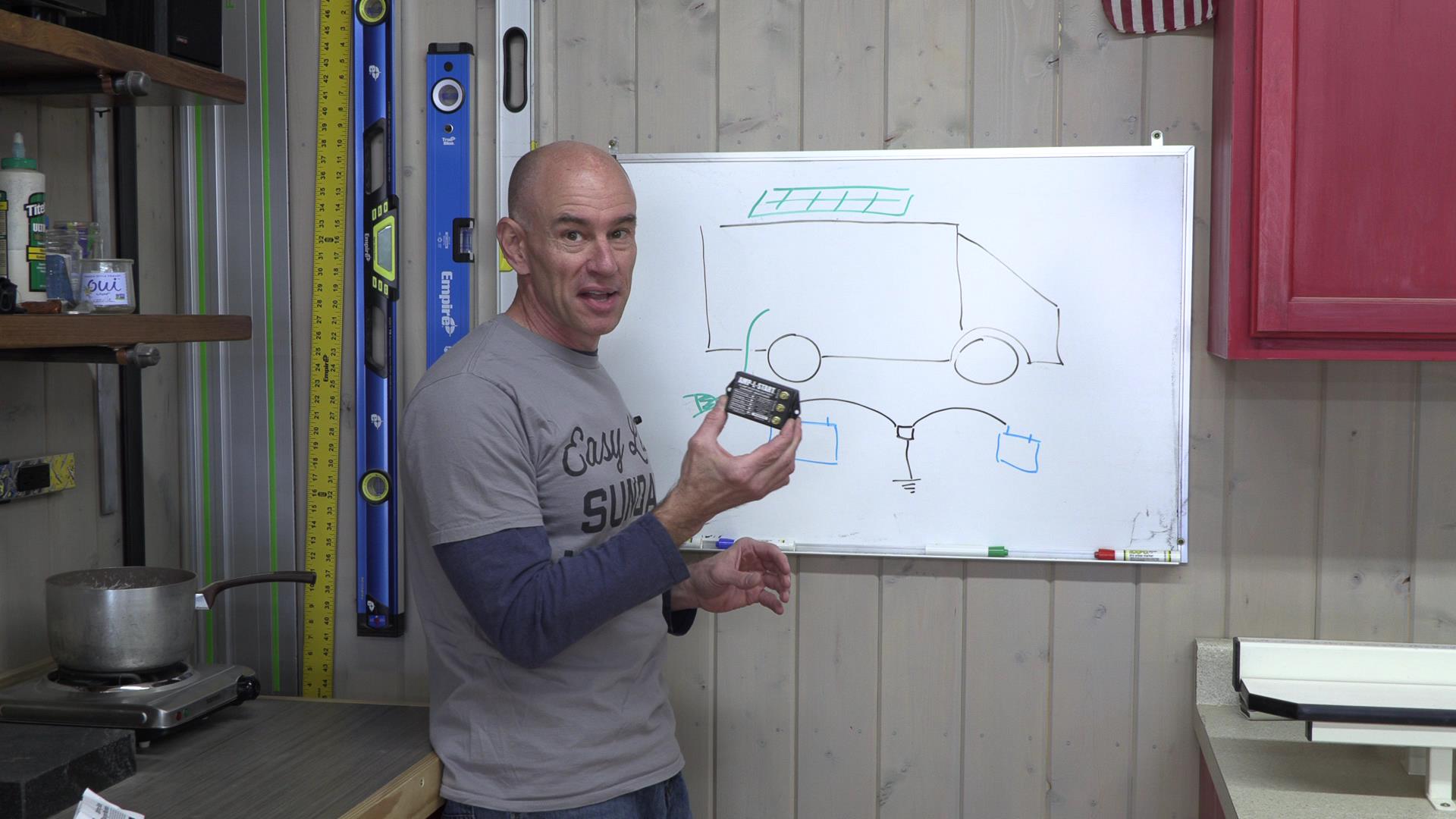
The main difference between something like the Timberline, and a traditional RV heater and water heater is this: In a traditional RV heater or water heater, the air or the water is heated directly. In a hydronic system, a fluid is heated instead (think: antifreeze). Then that fluid is used to move the heat around to where it’s needed.
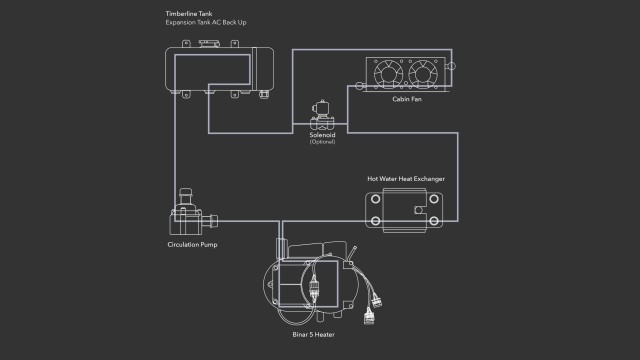
In the case of our Timberline system, the burner is outside the living space. The heated fluid is brought inside, and used to transfer heat to the air or water heat exchangers as desired. You can see all the components of the system in the video as we have them installed.
At the end of the day, the end result is the same level of comfort and convenience we had from our propane powered appliances, but without the hassle of propane.
But How Well Does It Work?
This would all just be an interesting diversion if it didn’t work as well or better than what it replaced. So how did we do?
In a word, fantastic. I’d sum it up like this:
The temperature of the air coming out of the registers is always at least 87% or more of the temperature of the air with the propane system, but the volume of air is around 3 times as much. A solid win.
As far as hot water, in our back-to-back-freezing-weather-shower-challenge, the Timberline system passed with flying colors.
You can see the highlights of the testing in the video, but if you want to look at the data for yourself, you can find it in this spreadsheet.
Timberline-Truma – Comparison Data
But remember, the performance is just one aspect of the improvement. The next time you go to fill up propane, and the one attendant at the Flying J who is certified to operate the propane filling station isn’t there… think of the Timberline system. For us, that’s a HUGE benefit, just getting rid of the propane.
At the end of the video, I try to answer what I anticipate will be some common questions about our Timberline system. But if you have others, go ahead and leave them down in the comments below and I’ll try to get you an answer.
We’ll see you out on the road. (But not at the propane filling station!…)






Thank you so much for this review. I was interested in how the hydronic heating system works, along with the control panel operation. You did a great job explaining both. I particularly appreciated the simple explanation of the control panel. I read and re-read my Winnebago (2023 Roam) manual and became more confused each time. You clarified that you can heat water without turning on the bottom two functions! The only thing I remain confused about is whether the 120 v heating element function can work when not on shore power, ie via the converter? Or when off shore power you are 100% dependent on the gas burner?
How the 120v element works depends entirely on how it’s wired. In our coach, it will work any time there’s 120v power – including from the batteries via the inverter. Other vehicles may be wired differently.
As to heating water, you will need to select one of the two bottom buttons (either electric or fuel). It can’t heat water without an energy input. That would be magic!
Note that the new Winnebago Roam (wheelchair-accessible Class B RV on a Promaster chassis) also uses the Timberline–perhaps hinting that we’ll see this hydronic heating setup on future versions of other Promaster-based RVs (like the Travato and Solis).
Cool beans!
we are about 7 months into owning our 2023 Roam and I’m still coming up to speed on this system. It’s not complicated but it’s not exactly intuitive either, particularly the control panel. We live in the PNW and it has not been challenged with super cold weather yet. It performed well with moderately cold, ie 40s. I will note that when I first was testing it out if was kicking on and off with an error signal. I’m hopeful this was just a new system working out its kinks.
When ours was installed, they went through an extensive procedure to purge the air out of the antifreeze lines. It’s possible yours was working some bubbles out… it’s a thing.
Great mod. Slick system.
Nice looking momentary switch that activates the solenoid valve that runs hot water throughout your lines and into your fresh water tank. What switch and solenoid valve did you use?
Enjoy following your videos and mods.
Thanks, Jack
No problem.
This is the valve: https://amzn.to/3w73Nod
I went with stainless, because I’m not a fan of brass in a potable water system.
This is the switch: https://amzn.to/4aDyY9T
Like USB ports, it’s difficult to find switches *without* led lights.
Thanks for the lead. I have a diesel fired Webasto DualTop air/water heater in my RV. It’s worked great for five years but Webasto doesn’t make it any longer. I’ll need to replace it eventually when parts get hard to find.
Please keep us informed as to how the Timberline is working. I’m very interested.
Will do. So far, we’re loving it!
Did you install this system yourself? Really looks complicated! Don’t think it would work in our 59k Travato!
We did not install this ourselves. (For one, on our rig, it involved dropping the gas tank… I’ve gotta draw the line somewhere…)
Doing this on a Travato would be challenging. For one, there’s not a lot of clearance under there.
I would never say it *can’t* be done, but I wouldn’t try it.
Great video! Any thoughts on a skid plate to protect the burner and hoses?
I asked Timberline about it and they said it wasn’t necessary. It’s behind the rear wheels – doesn’t need a skid plate anyways… more of a splash guard.
A great video. Many thanks for sharing! My understanding is the Timberline/Elwell systems use an inline fuel pump from the vehicle gas tank to the boiler. There are endless comments/posts/videos about those little pumps being very noisy.
Most of the information is coming out of people (generally in Europe) who are using Chinese diesel heaters in their vans. A bit of it is starting to come from people who are using the Timberline systems in their custom vans. The Airstream Rangeline has a Timberline system and many are reporting the ticking sound from the inline pump.
Any thoughts?
Thanks again
We can sort of hear a pulsing noise inside the van if the Timberline is running and it’s quiet nighttime. It’s not disruptive at all.
I’ve heard about the clicking noise, but we don’t experience it as a clicking – but maybe it sounds that way from outside the rig… I don’t know about that.
James, Does this affect the performance of your IRVWPC attached to your water pump now that you have taken out the Truma?
Interesting question. And, if anything, it runs *better* now, since there’s not a small tank that can be pressurized through two inputs.
I was just noticing this today. It used to be, we would get a louder pump sound on occasion. It hasn’t happened once since the Truma has been out. And the IRVWPC controller seems to be, if anything, more precise.
Side benefits of not actually having a hot water tank of any kind I suppose.
I have not found it that hard to refill the EKKO propane, but do agree that it’s something I could do without. There is the question of having propane for a grill or fire pit, etc. You could always keep one tank or even get a small 5lb tank just for that. Of course, if you have a gazillion watt hrs of batteries, you could go 100% electric cooking.
WGO is already using the diesel version of this in the Revel and for off-grid camping a tank full of gas will keep you warm a lot longer than two propane cylinders. I rather think this the probable future for the EKKO.
I agree – we do think the EKKO will wind up here eventually.
And as for exterior cooking – we’ve gone all electric. I have a griddle that will cook 8 pancakes at once, and it weighs less than one quarter what our Blackstone did!
What electric griddle do you have? Was just looking into getting one. Thanks
We have this one! https://amzn.to/4b0RFEj
I like that the feet come off and it stores super flat.
It does seem like some of the complaints people have about the EKKO could have been solved if they would have designed it with similar systems that made the Travato so popular- ie- lots of lithium (even 48V Volta) heat than can run off propane or shore power, induction cooktop, etc.
Anyway enjoy your videos and the upgrades you do.
Glad you like the mods!
Welcome aboard the propane-free train! I’ve been running an AeonRV which also uses gasoline for heat (with a heat pump minisplit as backup). However water heating on these rigs uses a different approach. They route engine antifreeze hoses around the gray tank, and through a heat exchanger that has about 8-9 gallons of water. This water is mixed with the cold to balance it to what temp you want. Typically after an hour drive, the hot water can last up to 3 days (depending of frequency of use). As a backup, there is an electric coil but it takes about 20-30 minutes and isn’t as “free” as scavenging heat from the engine. Keep the mods coming, good stuff!!
Scavenging heat from the engine is a cool approach!
I do like having an “on-demand” burner. Seems the best solution would incorporate both, perhaps.
That’s how the hydronic systems on the big diesel coaches work. You use the diesel burner to preheat the engine and then the same glycol loop carries heat from the engine to the hydronic system. Not only do you have a big tank of hot glycol for showers when you setup camp but you get free air heating all throughout the coach while you are going down the highway. It’s a slick system but it’s also much more expensive to keep running and can be temperamental as it ages.
Say what you will about propane but its simple and generally reliable. My nearly 25 year old Class A has all its factory propane appliances and they still light right up. I’m wondering about your propane regulator issues. I’ve heard complaints about the quality of quite a few things post pandemic shutdown (mostly car engine parts). I’m wondering if your propane regulators are just part of that reduction in manufacturing quality.
I don’t know what the cause was, but ordering propane regulators certainly gets old quick…
Do you think I could do this to my winnebago view.
I absolutely think this could be done to a Winnebago View.
Locations of the components/plumbing questions/ducting plan/etc. would all need to be figured out, but it’s almost certainly possible.
Hi James,
Nice upgrade and install. Like all your videos really. I’m sure there are many folks like me that would love to buy you guys’ van when you are ready for #2… WGO should just follow you, LOL!
Anyhow, it is the same heater that is on my Revel and overall really like it and Elwell has been great with support. Wish it had bluetooth to control from the phone (turn up the heat from bed in the am) but, seems unlikely to happen per my last conversation with Elwell. Heads up on a couple of (potential/eventual) issues:
1. Glycol leak from the burner. My opinion is that it will happen at some point to all units if not “upgraded” with extra sealant, maybe even with it…
2. Burner is made in Russia and parts/replacements are almost impossible to find if not through Elwell, probably even through them given world situation.
3. Burner hardware will rust, especially with your salted roads in UT
Few more small issues learned while rebuilding 2 units already. Contact me if you want more info on any of it, would be happy to pay back for the great info I have learned from you.
BTW, no need to post comment, just wanted to give you that info in case it was of interest.
Very interesting… Russian burners? Wouldn’t have guessed it.
Thanks for the info!
If its an autoterm boiler ,which I’m pretty sure it is, then its from latvia not russia.
James, this would be of interest. what are the material costs for this job?
I can’t say. I don’t believe Elwell sells the Timberline direct to consumers, so you’d have to go through a dealer.
Grant at FreedomVanGo should be able to work something up for you.
How do you go about selecting the Timberline vs other options (e.g. Rixen)?
I was able to put my hands on one in the Winnebago Revel. But what really sealed the deal for us was that we actually met the principals behind the company. (They were at Tampa!)
There’s something to be said for just being able to pick up the phone and call if you have a problem.
I don’t think I’ve ever seen or spoken with anyone from Webasto/Espar/Rixen/etc.
James, Great video as usual! I am interested in purchasing your Varioheat if it is available. Have not watched the full video yet if you mentioned what you did with your Truma equipment. Thanks! Larry
Sorry. We just returned the Varioheat.
Awesome video! I’ve been afraid of using gasoline for heating after choking on the noxious fumes of Honda generators from nearby campers. Can you report on how the Timberline exhaust smells/feels if it wafts your way when sitting outside the van? In some vehicles, like camper conversions, it can be hard to 100% seal the entire underside of the vehicle, and any exhaust that gets blown under the van by the wind inevitably creeps up through he floor via thermodynamics and is smelled inside he van…
As a side note, I bought and installed 1 inch I.D. straight-through scooter mufflers on both the intake and exhaust of my Propex furnace. This has brought down the noise level outside very low, and might be useful for your system for possibly better noise reduction than the current muffler you have.
Maybe we’re just lucky, but we haven’t hit any of those issues.
I’ve felt the exhaust, and while it’s certainly hot, I didn’t find it overly stinky. And we’ve *certainly* never smelled it inside the rig.
Maybe that will change if we try something at altitude, where the air/fuel mix is different, but we haven’t done that yet.
And we haven’t found the noise to be an issue, inside or out – changing the muffler has never crossed our minds.
Very nice overview of another van build option. Thank you!
Do you know how different the Timberline gasoline burner is from a Webasto gasoline air heater?
There has been a lot of detailed experince/discussion on how Webasto gasoline (vs diesel) heaters foul badly, especially at high altitudes.
I’m not familiar with the Webasto gas models.
Timberline is supposed to be good up to 10,000 feet, but we haven’t tested that… yet. 😉
James, I very much enjoy your upgrades and especially the thought process.
The ultimate upgrade will when you use your multiple skills to design the RV version of the Mr. Fusion Reactor. Myself and probably a few others would stand in a longline for that one James.
That one’s probably a bit in the future! 🙂
Cool system. This is basically what I’ve wanted to install in my own build(s). The one difference would be in the configuration. My van is a diesel, so my plan would be to pipe the system into the engine coolant as well and be configured to allow the Timberline to also pre-heat the engine in very cold temps. Being able to plug in makes it even better. I also planned to go with a recirculating shower, so that would mean dedicated heat exchangers for the shower and sink hot water.
FWIW, YouTubers Curt and Snow have a similar setup he designed and installed in his Sprinter conversion.
If we had a diesel, we would have investigated the engine pre-heat option, but we’re gas.
If I were doing it from scratch, there’s some interesting stuff you could do with the glycol lines (man, who wouldn’t love a heated floor!).
I really like this idea and hope Winnebago decides to go in this direction in the future. Is there any concern of fire with the burner outside underneath in a dry grassy area boondocking?
Interesting. I suppose it’s like any other tailpipe in that we’d want to keep it away from dry grass.
So I think the precautions I’d take for the engine are the same as I’d observe for the Timberline.
I do know it gets warm in that area. I had an exterior temperature sensor mounted there, and I had to move it. It started reading too warm when we had the Timberline going.
Not crazy warm like 200 degrees or anything, but warmer than the temperature outside.